


Digital business vs traditional business explained simply. Learn key differences, benefits, and which model is best for beginners in 2026.
Introduction
Understanding digital business vs traditional business is essential for anyone planning to start a business in today’s modern world. With technology rapidly evolving, many entrepreneurs are shifting from traditional methods to digital platforms.
But what exactly is the difference between these two business models? And which one is better for beginners in 2026?
In this guide, we’ll break down everything in a simple and easy-to-understand way so you can make the right decision.
Table of Contents
What Is a Digital Business?
A digital business is a company or organization that operates primarily online using digital technologies. It leverages the internet, software, automation, and data to offer products or services.
Unlike traditional businesses that rely on physical stores or manual processes, digital businesses run through websites, apps, and online platforms.
Simple Definition:
A digital business is any business that uses digital tools and online systems to create, market, sell, and deliver products or services.
Key Features of a Digital Business
- Operates online (websites, apps, platforms)
- Can reach global customers
- Lower startup and operational costs
- Uses digital marketing strategies
Examples include:
- E-commerce stores
- Blogging websites
- Online courses
- Freelancing services
Platforms like Shopify make it easy to create and manage digital businesses.
What Is a Traditional Business?
A traditional business operates in a physical location and interacts with customers face-to-face.
A traditional business is the most common and oldest form of business. It operates through physical locations and face-to-face interactions with customers. From local shops to large factories, traditional businesses form the backbone of many economies.
In this guide, you’ll get a deep understanding of traditional businesses, how they work, their advantages, challenges, and real-world examples.
A traditional business is a type of business that operates primarily through physical locations such as shops, offices, or markets. It relies on in-person interactions, manual processes, and offline systems to deliver products or services.
Unlike digital businesses that run online, traditional businesses depend heavily on:
- Physical presence
- Human interaction
- Local customer base
Simple Definition:
A traditional business is a business that operates offline using physical stores, face-to-face communication, and manual operations.
Key Features of a Traditional Business
- Physical store or office
- Local customer base
- Higher startup costs
- Requires inventory and staff
Examples include:
- Retail shops
- Restaurants
- Local service businesses
How a Traditional Business Works (Step-by-Step)
A traditional business follows a structured process:
Step 1: Purchase or Produce Goods
The business either buys products from suppliers or manufactures them.
Step 2: Store Inventory
Goods are stored in a physical location like a shop or warehouse.
Step 3: Attract Customers
Customers visit the store through:
- Location visibility
- Word of mouth
- Local advertising
Step 4: Sales Process
Customers:
- Visit the shop
- Choose products
- Pay (cash or POS)
Step 5: Customer Service
Support is provided in person.
The Future of Traditional Business
Traditional businesses are not disappearing but they are evolving.
Many are adopting:
- Online ordering
- Digital payments
- Social media marketing
This hybrid model is called “brick-and-click”, combining physical and digital business.
Digital Business vs Traditional Business: Key Differences
digital business vs traditional business comparison
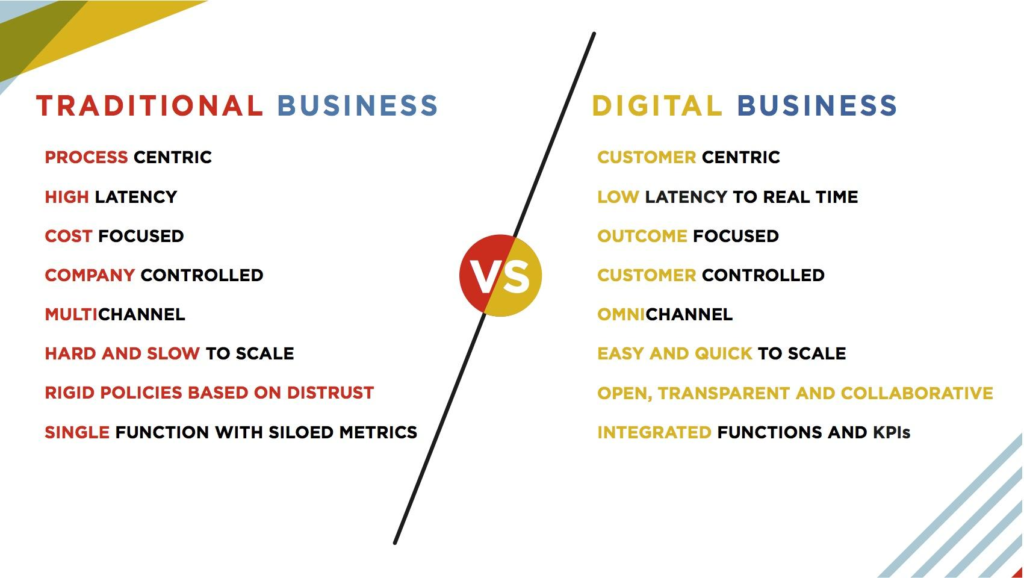
Understanding the difference between digital business vs traditional business helps you choose the right model.
Affordable Ways to Start a Business in 2026
1. Cost of Starting
Digital Business:
Low startup cost. You only need a laptop, internet, and basic tools.
Traditional Business:
High cost due to rent, equipment, inventory, and staff.
2. Market Reach
Digital Business:
Global reach. You can sell products or services worldwide.
Traditional Business:
Limited to a specific location or area.
3. Flexibility
Digital Business:
You can work from anywhere at any time.
Traditional Business:
Fixed working hours and location.
4. Marketing Approach
Digital Business:
Uses SEO, social media, and online ads. Learn strategies from HubSpot.
Traditional Business:
Relies on physical ads, word-of-mouth, and local promotions.
5. Scalability
Digital Business:
Easy to scale with automation and online tools.
Traditional Business:
Scaling requires more money, space, and employees.

Advantages of Digital Business
1. Low Investment
One of the biggest advantages is affordability. This is why many people prefer digital businesses.
2. Global Audience
You are not limited by location. You can reach customers worldwide.
3. Automation
Tools can automate tasks like marketing, sales, and customer support.
4. Easy to Start
You can launch quickly without complex processes.
Advantages of Traditional Business
1. Personal Interaction
Face-to-face communication builds trust with customers.
2. Local Market Control
You can dominate a specific area or community.
3. Immediate Sales
Customers can buy products instantly in-store.
Disadvantages of Digital Business
- High competition online
- Requires digital skills
- Takes time to build trust
Disadvantages of Traditional Business
- High startup costs
- Limited growth potential
- Fixed location and hours
Which Is Better: Digital Business vs Traditional Business?
Both models have their strengths and weaknesses. While traditional businesses have been around for centuries, digital businesses are growing fast due to technology and internet access.
Understanding the differences between these two business models will help you decide which one is right for your goals, budget, and lifestyle.
Digital Business vs Traditional Business (Detailed Comparison)
To truly understand digital business vs traditional business, we need to compare them across multiple important factors.
1. Cost of Starting the Business
One of the biggest differences is the startup cost.
Digital Business:
Starting a digital business is usually low-cost. You only need:
- A website
- Internet connection
- Basic too
You can even start with little or no money using freelancing or content creation.
Traditional Business:
A traditional business requires significant investment, including:
- Rent for a shop
- Furniture and setup
- Inventory
- Employees
Digital business is more affordable and beginner-friendly.
2. Market Reach and Growth Potential
Digital Business:
A digital business can reach customers worldwide. With the internet, your audience is not limited by location.
For example, you can sell a product to someone in another country without leaving your home.
Traditional Business:
Traditional businesses mostly serve local customers. Expanding requires opening new branches, which costs money and time.
Digital business has a much larger growth potential.
3. Flexibility and Lifestyle
Digital Business:
You can work from:
- Home
- Anywhere in the world
You can choose your own schedule and work anytime.
Traditional Business:
You must:
- Be physically present
- Follow fixed working hours
Digital business offers more freedom and flexibility.
4. Customer Interaction and Trust
Traditional Business:
Face-to-face interaction builds strong trust. Customers can:
- See products physically
- Talk directly to the seller
This creates strong relationships.
Digital Business:
Customer interaction is online, which can sometimes feel less personal. However, reviews and branding help build trust.
Traditional business is stronger in personal trust.
Digital Business:
Operations can be automated:
- Payments
- Emails
- Marketing
This makes processes faster and more efficient.
5. Speed and Efficiency
Traditional Business:
Many processes are manual:
- Handling cash
- Managing inventory
This can slow down operations.
Digital business is faster and more efficient.
6. Risk and Stability
Traditional Business:
Often considered more stable because:
- Customers are local
- Demand is predictable
Digital Business:
Can be competitive and unpredictable:
- Algorithm changes
- Online competition
Traditional business may feel more stable, but digital business offers higher growth.
7. Scalability (Ability to Grow)
Digital Business:
You can scale quickly without major costs.
Example:
- Sell to 10 or 10,000 customers with minimal extra cost
Traditional Business:
Scaling requires:
- More space
- More staff
- More investment
Digital business is easier to scale.
The answer depends on your goals, budget, and skills.
Choose Digital Business If:
- You have a low budget
- You want flexibility
- You prefer working online
Choose Traditional Business If:
- You prefer physical interaction
- You have enough capital
- You want a local presence
In 2026, digital businesses are growing faster due to technology and global access.
The Best Option: Hybrid Business Model
In 2026, the smartest approach is combining both models.
This is called a hybrid business or “brick-and-click” model.
Example:
- A physical shop + online store
- Restaurant + online delivery app
Why it works:
You get:
- Local trust (traditional)
- Global reach (digital)
Future Trends: Where Business Is Heading
The future is clearly moving toward digital, but traditional business is not disappearing.
Instead:
- Traditional businesses are going online
- Digital businesses are building physical presence
The line between them is becoming smaller.
So, when it comes to digital business vs traditional business, which is better?
- Digital business is better for growth, flexibility, and low cost
- Traditional business is better for trust and local relationships
However, the best strategy in 2026 is to combine both.
How to Transition from Traditional to Digital
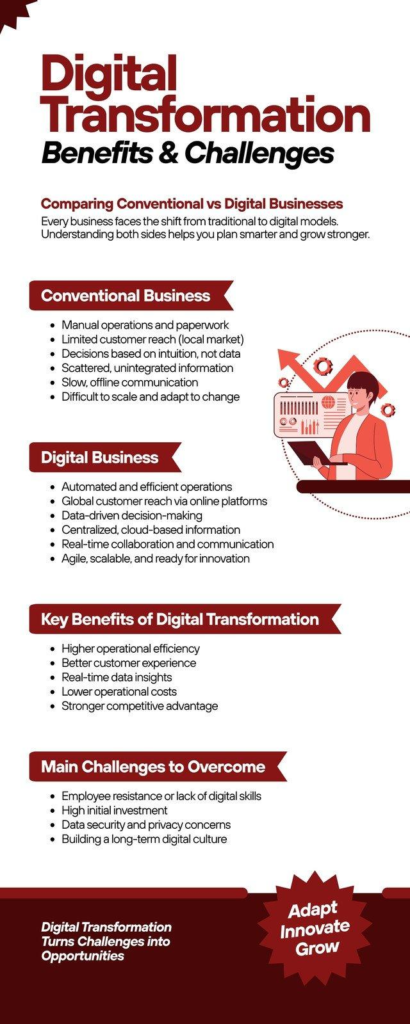
Many businesses are combining both models.
How Does a Digital Business Work?
A digital business typically follows this process:
- Create a Product or Service
- Build an Online Platform (Website/App)
- Market Using Digital Channels (SEO, Social Media)
- Sell or Deliver Online
- Use Analytics to Improve
- Learn SEO from Moz
Everything happens digitally, making operations faster and more efficient.
How to Start a Digital Business (Step-by-Step)
If you’re inspired to start, follow these steps:
Step 1: Choose a Business Idea
Pick something based on your skills or interests.
Step 2: Research Your Market
Understand your target audience and competitors.
Step 3: Create a Website or Platform
Use tools like WordPress, Shopify, or custom apps.
Step 4: Develop Your Product or Service
Ensure it solves a real problem.
Step 5: Set Up Payment Systems
Use secure online payment gateways.
Step 6: Market Your Business
Use:
- SEO
- Social media
- Email marketing
Step 7: Analyze and Improve
Track performance and optimize your strategy.
Why Digital Businesses Are Growing Fast
Here’s why more people are choosing digital businesses:
- Increased internet usage worldwide
- Growth of online shopping
- Remote work trends
- Low barriers to entry
- Access to global customers
Tips for Success in Digital Business
To succeed, follow these tips:
- Focus on solving real problems
- Build a strong online presence
- Invest in digital marketing
- Keep learning new skills
- Stay consistent
Conclusion
Understanding digital business vs traditional business is crucial before starting your entrepreneurial journey. Both models have their strengths and weaknesses, but digital businesses offer more flexibility, lower costs, and global opportunities.
If you’re just starting out in 2026, a digital business is often the smarter choice. However, combining both models can give you the best results.
The key is to choose what fits your goals, take action, and stay consistent.
FAQs
1. Which is more profitable: digital or traditional business?
Digital businesses can be more profitable due to lower costs and global reach.
2. Is traditional business outdated?
No, but it must adapt to digital trends.
3. Can I run both businesses together?
Yes, many successful businesses use a hybrid model.
4. What is the biggest advantage of digital business?
Scalability and global reach.