


Explore the top 10 emerging technology trends in 2026 that are changing the world. Learn about AI, blockchain, cybersecurity, green technology, and future innovations.
Introduction
Technology is evolving faster than ever before, and 2026 is expected to be one of the most important years for digital innovation. New tools, smarter systems, and advanced machines are changing how people work, communicate, learn, and do business. What once seemed like future technology is now becoming part of everyday life. From artificial intelligence and quantum computing to green energy and blockchain, these innovations are shaping the future in powerful ways.
In this guide, we cover the most important emerging technology trends in 2026 that every business and individual should know.
For businesses, staying updated with emerging technology trends in 2026 is no longer optional. Understanding emerging technology trends in 2026 is essential for businesses that want to stay competitive. Companies that understand and adopt new technologies early often gain a strong advantage over competitors. They can improve productivity, reduce costs, serve customers better, and create new products or services. For entrepreneurs and content creators, these trends also open new opportunities to build online businesses, create digital products, and reach global audiences.
In this guide, we will explore the top 10 emerging technology trends in 2026 that are changing the world. Each trend is explained in simple language so you can understand what it is, why it matters, and how it may affect the future. Whether you are a student, business owner, marketer, or tech enthusiast, this article will help you stay informed and prepared.
Why Emerging Technology Trends Matter in 2026
Understanding emerging technology trends in 2026 is not just important for tech experts it is important for everyone. Technology now affects almost every part of daily life, from communication and education to healthcare and business operations. As new innovations continue to appear, individuals and organizations must adapt quickly to stay relevant.
For businesses, adopting new technologies early can lead to major advantages. Companies can improve efficiency, reduce costs, and offer better services to their customers. For example, businesses using artificial intelligence can automate repetitive tasks, while those using data analytics can make smarter decisions based on real-time information.
For individuals, learning about these trends can open new career opportunities. Many high-demand jobs in 2026 are related to technology, including AI specialists, cybersecurity experts, data analysts, and software developers. By understanding these trends, people can prepare for future job markets and build valuable skills.
In addition, emerging technologies are driving global innovation. They help solve major problems such as climate change, healthcare challenges, and resource management. This makes them not only important for business success but also for the future of society.
Many experts believe that emerging technology trends in 2026 will shape the global economy.
1. Artificial Intelligence (AI) and AI Agents
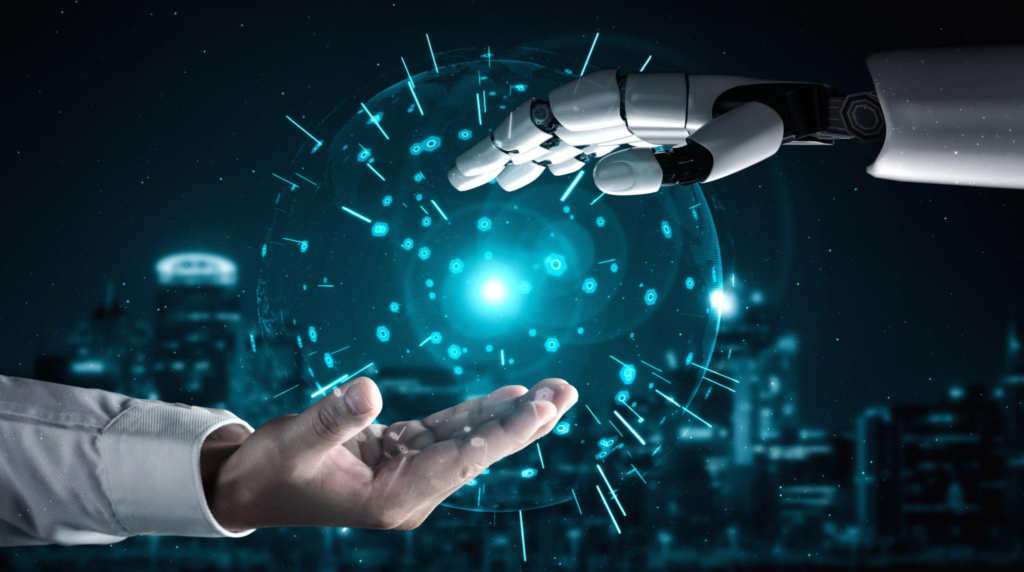
Artificial Intelligence continues to be the most powerful and influential technology trend in 2026. AI is no longer limited to simple automation or basic chatbots. It is now becoming more advanced, more independent, and more useful in real-world situations. AI agents can perform tasks, make decisions, analyze data, and support users with very little human input.
One of the biggest changes in 2026 is the rise of AI agents that can work like digital assistants. These agents can manage emails, schedule meetings, answer customer questions, write reports, and even help with research. Businesses are using AI to save time and improve efficiency across many departments. In healthcare, AI helps doctors detect diseases earlier. In finance, it helps identify fraud and analyze market trends. In marketing, AI helps create personalized campaigns and improve customer engagement.
The impact of emerging technology trends in 2026 can already be seen in healthcare, finance, and education.
Key Developments:
- AI agents that automate daily workflows
- Better natural language understanding
- Smarter decision-making systems
- More accurate predictions and recommendations
Real-World Examples:
- Customer service chatbots that answer questions instantly
- AI tools that help doctors analyze medical scans
- Marketing platforms that create personalized ads
- AI assistants that support business operations
Benefits:
- Saves time and labor
- Improves accuracy and speed
- Reduces operational costs
- Enhances customer experience
Challenges:
- Ethical concerns about AI decisions
- Risk of job displacement in some industries
- Data privacy and security issues
- Dependence on high-quality training data
AI is expected to continue growing in 2026 and beyond. It will likely become a core part of almost every industry, making it one of the most important technologies to watch.
2. Generative AI
Generative AI is one of the most exciting innovations in 2026. This technology can create new content such as text, images, videos, music, and code. It is changing how people produce digital content and how businesses operate online. Instead of spending hours creating content manually, users can now generate high-quality material in minutes.
For bloggers, marketers, designers, and developers, generative AI is a major productivity tool. It helps create blog posts, social media captions, product descriptions, website copy, logos, illustrations, and even software code. Many businesses are using generative AI to scale content production while keeping costs low. This is especially useful for small businesses and startups that need to move quickly.
Generative AI is also becoming more personalized. emerging technology trends In 2026, AI tools can adapt to user preferences, writing style, brand voice, and audience needs. This makes the content more relevant and effective. As the technology improves, it will become even easier for people to create professional-quality digital assets without advanced technical skills.
These emerging technology trends in 2026 are creating new opportunities for entrepreneurs.
Use Cases:
- Blog writing and SEO content creation
- Video scripts and editing support
- Graphic design and branding
- Software development and coding assistance
- Product descriptions and ad copy
Impact on Businesses:
Generative AI helps companies produce more content in less time. It also allows teams to focus on strategy, creativity, and growth instead of repetitive tasks. Many online entrepreneurs are using AI tools to launch websites, build digital products, and grow their brands faster.
emerging technology trends in 2026 is essential for businesses that want to stay competitive.
Future Outlook:
Generative AI will become more accurate, more creative, and more integrated into everyday tools. It will likely play a major role in education, entertainment, business, and communication.
3. Quantum Computing
Quantum computing is one of the most advanced emerging technologies in 2026. Unlike traditional computers that use bits, quantum computers use qubits, which can process information in very different ways. This gives them the potential to solve extremely complex problems much faster than normal computers.
Quantum computing is still developing, but its future impact is enormous. In healthcare, it may help researchers discover new drugs and treatments. In finance, it can improve risk analysis and portfolio management. In cybersecurity, it may help create stronger encryption systems. Scientists also believe quantum computing could help solve problems in climate modeling, logistics, and materials science.
Although the technology is powerful, it still faces major challenges. Quantum computers are expensive, difficult to build, and require highly specialized knowledge. They are not yet widely available for everyday use. However, many large companies and research institutions are investing heavily in this field because of its long-term potential.
Key Advantages:
- Solves complex problems faster
- Supports advanced scientific simulations
- Improves cryptography and security
- Helps with large-scale data analysis
Industries Affected:
- Healthcare and drug discovery
- Finance and investment analysis
- Cybersecurity and encryption
- Scientific research and engineering
Challenges:
- High development cost
- Limited access to hardware
- Technical complexity
- Need for specialized talent
Quantum computing may not replace traditional computers, but it will likely become a powerful tool for solving problems that are too difficult for current systems.
4. Cybersecurity and Zero Trust Architecture

As more people and businesses move online, cybersecurity has become one of the most important technology trends in 2026. Cyber threats are growing in number and sophistication. Hackers are using advanced methods to steal data, disrupt systems, and attack organizations. Because of this, companies must invest in stronger security systems.
One of the biggest changes in cybersecurity is the adoption of Zero Trust Architecture. This model assumes that no user or device should be trusted automatically, even if it is inside the network. Every request must be verified before access is granted. This approach helps reduce the risk of internal and external attacks.
Artificial intelligence is also improving cybersecurity. AI-powered systems can detect unusual behavior, identify threats faster, and respond to attacks in real time. Cloud security, identity protection, and data encryption are also becoming more important as businesses store more information online.
These emerging technology trends in 2026 are creating new opportunities for entrepreneurs.
Key Trends:
- Zero Trust Security model
- AI-based threat detection
- Cloud security solutions
- Stronger identity and access management
Why It Matters:
Cybersecurity protects sensitive information, customer trust, and business operations. Without strong security, companies can lose money, reputation, and valuable data.
Future Outlook:
Cybersecurity will become more intelligent and proactive. Instead of only reacting to attacks, systems will predict and prevent them before damage occurs.
5. Internet of Things (IoT)
The Internet of Things, or IoT, connects physical devices to the internet so they can collect, share, and analyze data. In 2026, IoT is becoming more common in homes, businesses, factories, and cities. Smart devices are making life more convenient and efficient.
In homes, IoT powers smart thermostats, security cameras, lighting systems, and appliances. In healthcare, wearable devices track heart rate, sleep, and activity levels. In cities, IoT helps manage traffic, energy use, and public services. In factories, connected machines improve production and reduce downtime.
The growth of IoT is creating new opportunities, but it also brings challenges. Since many devices are connected to the internet, security and privacy are major concerns. If devices are not properly protected, hackers may gain access to sensitive data or systems.
By following emerging technology trends in 2026, companies can improve efficiency and innovation.
Examples:
- Smart homes
- Wearable fitness devices
- Smart cities
- Connected industrial machines
Benefits:
- Improves efficiency
- Enables real-time monitoring
- Increases convenience
- Supports automation
Challenges:
- Security risks
- Data privacy concerns
- Device compatibility issues
IoT is expected to continue expanding rapidly as more devices become connected and more industries adopt smart technology.
6. 5G and 6G Connectivity
Fast and reliable internet is the foundation of modern technology. In 2026, 5G networks are becoming more widespread, while 6G is being developed for the future. These technologies are improving communication, supporting smart devices, and enabling new digital experiences.
5G offers faster speeds, lower latency, and better performance than previous generations of mobile networks. This makes it ideal for video streaming, online gaming, remote work, and connected devices. It also supports technologies like autonomous vehicles, smart factories, and augmented reality.
6G is expected to go even further. Although it is still in development, experts believe it will provide ultra-fast speeds, stronger connectivity, and more intelligent network systems. It may also support advanced applications such as holographic communication and real-time digital environments.
Benefits:
- Faster internet speeds
- Lower latency
- Better device connectivity
- Improved digital experiences
Impact:
- Supports autonomous vehicles
- Expands IoT networks
- Enhances remote work
- Improves virtual and augmented reality
Future:
6G will likely become a major part of the next generation of communication technology, enabling even more advanced applications.
7. Edge Computing
Edge computing is becoming more important in 2026 because many devices and applications need faster data processing. Instead of sending all data to a central cloud server, edge computing processes data closer to where it is created. This reduces delays and improves performance.
This technology is especially useful in situations where speed matters. For example, autonomous vehicles need instant decisions to stay safe. Smart factories need real-time data to keep machines running efficiently. Healthcare devices may need immediate responses to monitor patients properly.
Edge computing also helps reduce network traffic and improve reliability. Since data does not always need to travel long distances, systems can respond faster and use resources more efficiently.
Understanding emerging technology trends in 2026 is essential for businesses that want to stay competitive.
Advantages:
- Faster processing
- Reduced latency
- Better performance
- Improved reliability
Use Cases:
- Autonomous vehicles
- Smart manufacturing
- Real-time analytics
- Healthcare monitoring systems
Edge computing is essential for modern applications that require quick responses and local data processing.
8. Robotics and Automation
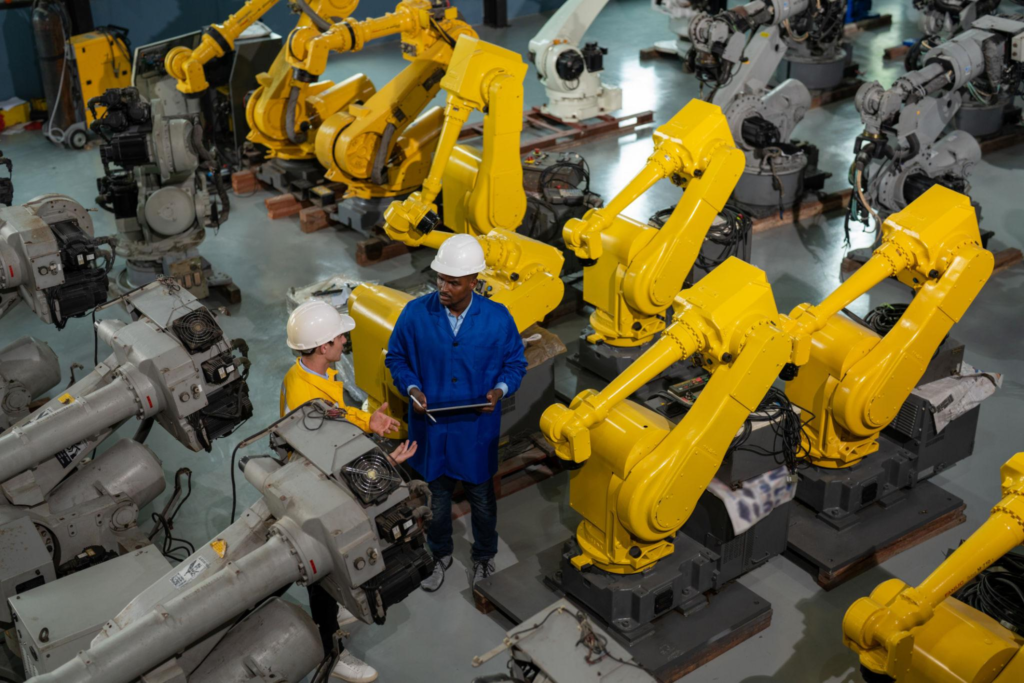
Robotics and automation are transforming industries by making machines smarter and more capable. In 2026, robots are being used in manufacturing, healthcare, logistics, agriculture, and even customer service. Automation helps businesses complete tasks faster, reduce errors, and improve productivity.
In factories, robots can assemble products, inspect quality, and move materials. In hospitals, robotic systems can assist with surgery or patient care. In warehouses, automation helps sort, pack, and deliver goods more efficiently. As artificial intelligence improves, robots are becoming more flexible and intelligent.
Automation does raise concerns about job displacement, but it also creates new opportunities. Workers may need to learn new skills to manage, maintain, and improve automated systems. Businesses that adopt robotics early often gain a strong competitive advantage.
By following emerging technology trends in 2026, companies can improve efficiency and innovation.
Applications:
- Manufacturing
- Healthcare
- Logistics and delivery
- Agriculture
- Customer support
Benefits:
- Increased productivity
- Reduced human error
- Lower long-term costs
- Better consistency
Future Outlook:
Robots will continue to become more advanced, more autonomous, and more useful in both industrial and everyday settings.
9. Green Technology and Sustainability
Sustainability is one of the most important global priorities in 2026. Green technology focuses on reducing environmental impact and supporting eco-friendly solutions. As climate change becomes a bigger concern, businesses and governments are investing in cleaner and more efficient technologies.
Renewable energy sources such as solar and wind power are becoming more affordable and widely used. Electric vehicles are gaining popularity as people look for cleaner transportation options. Companies are also improving manufacturing processes to reduce waste, save energy, and lower carbon emissions.
Green technology is not only good for the environment it is also good for business. Consumers are increasingly choosing brands that care about sustainability. Governments are also introducing policies that encourage cleaner practices and energy efficiency.
By following emerging technology trends in 2026, companies can improve efficiency and innovation.
Innovations:
- Renewable energy systems
- Electric vehicles
- Sustainable manufacturing
- Energy-efficient buildings
Importance:
- Reduces carbon emissions
- Protects natural resources
- Supports climate goals
- Encourages responsible innovation
Green technology is no longer optional. It is becoming a necessary part of the future economy.
10. Blockchain and Web3
Blockchain technology is changing how data and transactions are managed. It creates secure, transparent, and decentralized systems that do not rely on a single central authority. In 2026, blockchain is being used in finance, supply chains, digital identity, and many other areas.
One of the most well-known uses of blockchain is cryptocurrency, but the technology goes far beyond digital money. It can help track products in a supply chain, verify identities, and store records securely. Because blockchain data is difficult to alter, it offers strong protection against fraud and tampering.
Web3 is the next stage of the internet, built on blockchain principles. It gives users more control over their data, digital assets, and online identity. Many people believe Web3 will create a more open and user-owned internet in the future.
Key Features:
- Decentralization
- Transparency
- Security
- Data ownership
Applications:
- Cryptocurrency
- Supply chain management
- Digital identity
- Smart contracts
Future of Web3:
Web3 may change how people interact online by giving them more control and reducing dependence on centralized platforms.
Many experts believe that emerging technology trends in 2026 will shape the global economy.
Additional Emerging Trends to Watch
While the top 10 trends are the most important, several other technologies are also gaining attention in 2026. These include:
- Augmented Reality (AR) and Virtual Reality (VR)
- Biotechnology and genetic engineering
- Autonomous vehicles
- Space technology
These innovations are still developing, but they may become major forces in the future. AR and VR are improving gaming, education, and training. Biotechnology is helping scientists make progress in medicine and agriculture. Autonomous vehicles may change transportation. Space technology is opening new possibilities for communication, exploration, and research.
These emerging technology trends in 2026 are creating new opportunities for entrepreneurs.
Benefits of Emerging Technologies
Emerging technologies bring many benefits to individuals, businesses, and society as a whole. They help people work faster, solve problems more effectively, and create new opportunities.
Main Benefits:
- Increased efficiency and productivity
- New business opportunities
- Improved quality of life
- Better communication and connectivity
- Faster innovation across industries
These technologies also help organizations stay competitive in a fast-changing world. Companies that adapt early are often better prepared for future growth.
Understanding emerging technology trends in 2026 is essential for businesses that want to stay competitive.
Challenges of Emerging Technologies
Although emerging technologies offer many advantages, they also come with challenges. Businesses and governments must address these issues carefully to ensure responsible use.
Main Challenges:
- High implementation costs
- Security and privacy concerns
- Ethical issues
- Skill gaps in the workforce
- Dependence on advanced infrastructure
To overcome these challenges, organizations need proper planning, training, and investment. Responsible innovation is important for long-term success.
How to Prepare for Future Technology
To stay ahead in 2026 and beyond, individuals and businesses should take action now. Technology changes quickly, and those who prepare early will have a better chance of success.
Steps to Prepare:
- Learn new digital skills
- Follow technology trends regularly
- Invest in innovation and automation
- Improve cybersecurity practices
- Adapt quickly to change
By staying informed and flexible, you can take advantage of new opportunities as they appear.
Real-World Impact of Emerging Technologies
Emerging technologies are not just concepts they are already making a real impact around the world. In many industries, companies are using these technologies to improve operations and deliver better results.
In healthcare, AI and data analytics are helping doctors diagnose diseases faster and more accurately. Hospitals are also using robotics to assist in surgeries and patient care. In education, digital platforms and AI tools are making learning more accessible and personalized for students.
In business, automation and cloud computing are helping companies scale faster and operate more efficiently. Small businesses can now compete with larger companies by using digital tools and online platforms. In transportation, technologies like autonomous vehicles and smart traffic systems are improving safety and reducing congestion.
By following emerging technology trends in 2026, companies can improve efficiency and innovation.
Even in everyday life, people are experiencing the benefits of emerging technologies. Smart devices make homes more comfortable and energy-efficient. Mobile apps provide instant access to information and services. Online platforms connect people across the world in real time.
These examples show that technology is not just shaping the future it is already transforming the present.
Many experts believe that emerging technology trends in 2026 will shape the global economy.
FAQs
What are emerging technology trends?
Emerging technology trends are new innovations that are still developing but have the potential to significantly impact the future. They often change how people live, work, and communicate.
Why are these trends important?
These trends are important because they help businesses stay competitive, improve efficiency, and prepare for future changes in the market and society.
Which technology is most important in 2026?
Artificial Intelligence is considered the most important technology in 2026 because it is being used in many industries and has a wide range of applications.
Will these technologies affect jobs?
Yes, some technologies may replace certain tasks, but they will also create new jobs and new skill requirements. Learning new skills is the best way to stay prepared.
How can businesses benefit from emerging technologies?
Businesses can use emerging technologies to reduce costs, improve customer service, increase productivity, and create new products or services.
Conclusion
The top 10 emerging technology trends in 2026 are transforming the world in powerful and meaningful ways. Artificial intelligence, generative AI, quantum computing, cybersecurity, IoT, 5G, edge computing, robotics, green technology, and blockchain are all shaping the future of industries and everyday life.
These technologies are creating new opportunities, By following emerging technology trends in 2026, companies can improve efficiency and innovation.improving efficiency, and changing how people interact with the digital world. At the same time, they bring challenges that must be managed carefully. Businesses, entrepreneurs, and individuals who understand these trends will be better prepared for the future.
Understanding emerging technology trends in 2026 is essential for businesses that want to stay competitive. To remain competitive and successful, it is important to embrace innovation, learn new skills, and adapt to change. The future belongs to those who are ready for it.